 707c49dd3f
Complete website build including:
- Build Your Kit store page with cart system, sectioned layout
  (Hardware, Software, Attachments, Spare Parts), inline quote
  request form, and sticky sidebar summary
- 16+ pages: Education, Platform, Resources, News, About Us,
  Download, Contact, Rover, Code Editor, Robot Simulator, etc.
- 89+ MDX resource articles and 18 news posts
- Store product images scraped from micromelon.com.au
- Quote request API route with Airtable integration
- Dynamic back links and cover photos on resource pages
- Redesigned downloads page
- Fixed corrupted MDX code blocks
163 lines
7.7 KiB
Plaintext
163 lines
7.7 KiB
Plaintext
---
|
||
title: "Case Study: Year 7 Digital Tech at St Peters Lutheran College"
|
||
date: "2021-07-06"
|
||
categories: ["All", "Customer Stories"]
|
||
tags: []
|
||
excerpt: "See how Meg Foley at St Peters conducted a challenge for their Year 7s using Micromelon."
|
||
featuredImage: "/images/resources/year-7-digital-tech-at-st-peters.png"
|
||
---
|
||
|
||
|
||
|
||
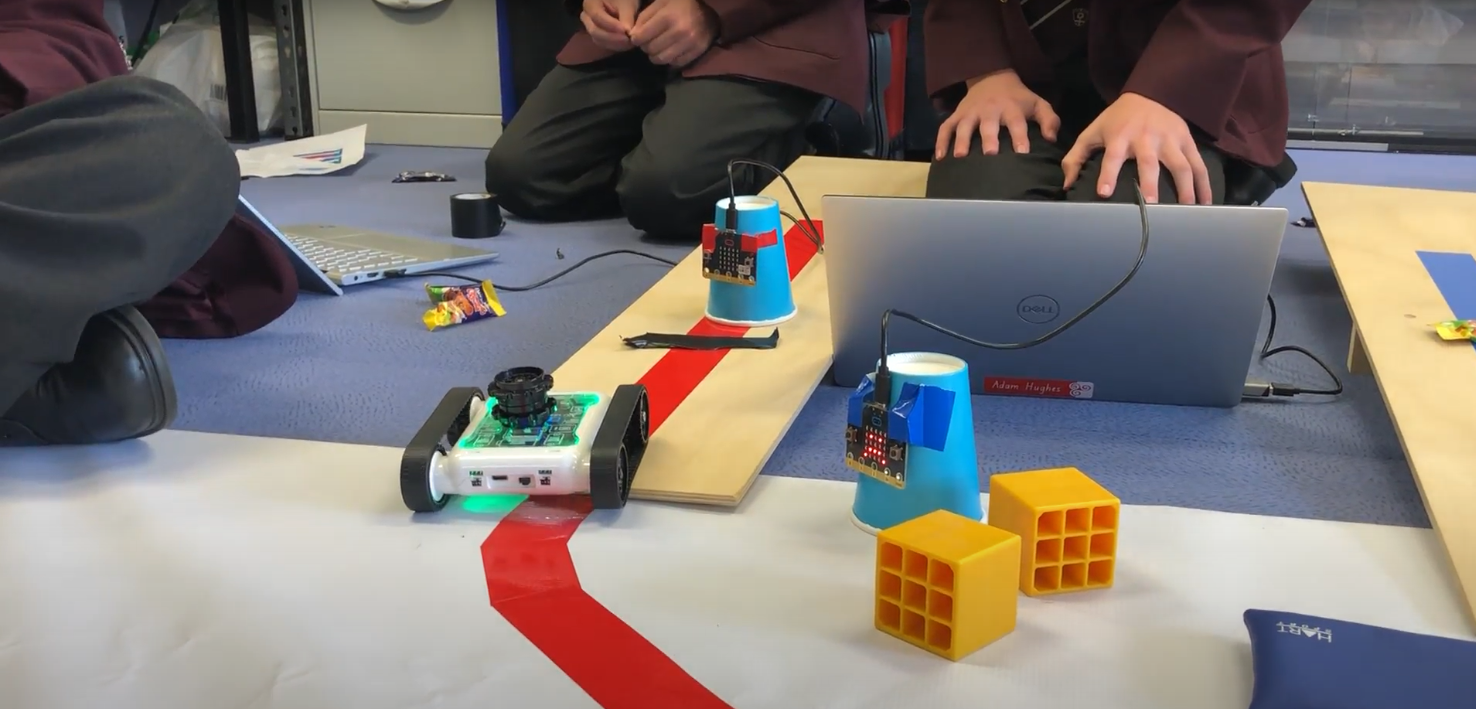
For the final unit of Digital Technology this Semester, Year 7 students were given a whirlwind tour of physical computing through learning how to code Microbits, Lego Mindstorms EV3 robotic arms and Micromelon Robots (two lessons for each one) before attempting a final activity incorporating all three technologies.
|
||
|
||
**Building a Knowledge Base**
|
||
|
||
To familiarize themselves with the technology, students were given basic code (Blocks and Python) and were asked to improve the code by reading the sensors, updating the values and adding any extra functions that they needed. Students were provided with a few activities during the two lessons that they could complete in pairs. These activities allowed the students to get to know the device, understand how it functions, what sensors it uses and how to code it.
|
||
|
||
**Learning Through Exploring**
|
||
|
||
Many pairs then went on to create their own activities and build on the code that was provided. For example, for the Micromelon lessons, students were given an activity card with line following, balance board and obstacle avoidance code. A few groups then found they could combine these to complete an obstacle course. Giving students a choice and allowing for exploration and play helped the students to consolidate their learning.
|
||
|
||

|
||
|
||
**Analysing and Understanding**
|
||
|
||
After each lesson, students were then asked to reflect on their program in a journal, share their code, answer questions and share any new learnings. Students were asked to respond to the following:
|
||
|
||
- What did you learn during the lesson? - Explain what you created and how it works.
|
||
|
||
- Was there anything you found hard? -** **Share how you overcame challenges
|
||
|
||
- How could this type of technology be used in a Smart City? - Discuss the use of sensors, “codable” technology and autonomous vehicles.
|
||
|
||
**The Final Activity**
|
||
|
||
The culminating activity for the Physical Computing unit was getting students to collaborate using the three devices to solve a challenge, in a ‘Smart City’ style setting. The challenge outline was,
|
||
|
||

|
||
|
||
- Code the EV3 robotic arm to drop a tyre stack onto the Micromelon Rover,
|
||
|
||
- The Micromelon Rover then needed to follow a line, avoid obstacles and drive onto a balance board.
|
||
|
||
As an additional challenge, an EV3 rover was programmed to drive around on the black line as a ‘moving obstacle’. Students worked in pairs or trios to solve their part of the challenge; these groupings then worked together as a team (e.g. Red, Blue, Yellow teams).
|
||
|
||
- Once the Micromelon Rover drove over and tipped the balance board, the Microbit would be triggered and light up.
|
||
|
||
**The Learning Outcomes**
|
||
|
||
Students seemed to really engage in this activity as it was challenging, but not impossible, with a number of teams able to complete all aspects of the challenge. Some students struggled with the margin of error when reading the Micromelon Rover sensors (the code given used the brightness reading), especially when the line curved or had a corner. A number of students found solving the challenge really exciting; they felt a real sense of achievement when they solved a problem. It was awesome to see students express the feeling of ‘oh I did that, I made the robot move and follow the line!’
|
||
|
||
### Related Posts
|
||
|
||
Resources
|
||
|
||
[
|
||
|
||

|
||
|
||
](/resources/creating-a-sumo-unit)
|
||
|
||
[All](/resources?category=All)
|
||
|
||
[Creating A Sumo Unit For Your Digital Technologies Class](/resources/creating-a-sumo-unit)
|
||
|
||
[All](/resources?category=All)
|
||
|
||
How to run a sumo unit in your digital technologies classroom.
|
||
|
||
[Read More →](/resources/creating-a-sumo-unit)
|
||
|
||
[All](/resources?category=All)
|
||
|
||
[
|
||
|
||

|
||
|
||
](/resources/ultrasonic-sensor)
|
||
|
||
[All](/resources?category=All), [Guides](/resources?category=Guides)
|
||
|
||
[The Ultrasonic Sensor](/resources/ultrasonic-sensor)
|
||
|
||
[All](/resources?category=All), [Guides](/resources?category=Guides)
|
||
|
||
Learn all about the ultrasonic sensor!
|
||
|
||
[Read More →](/resources/ultrasonic-sensor)
|
||
|
||
[All](/resources?category=All), [Guides](/resources?category=Guides)
|
||
|
||
[
|
||
|
||

|
||
|
||
](/resources/year-7-digital-tech-at-st-peters)
|
||
|
||
[All](/resources?category=All), [Customer Stories](/resources?category=Customer+Stories)
|
||
|
||
[Case Study: Year 7 Digital Tech at St Peters Lutheran College](/resources/year-7-digital-tech-at-st-peters)
|
||
|
||
[All](/resources?category=All), [Customer Stories](/resources?category=Customer+Stories)
|
||
|
||
See how Meg Foley at St Peters conducted a challenge for their Year 7s using Micromelon.
|
||
|
||
[Read More →](/resources/year-7-digital-tech-at-st-peters)
|
||
|
||
[All](/resources?category=All), [Customer Stories](/resources?category=Customer+Stories)
|
||
|
||
[
|
||
|
||

|
||
|
||
](/resources/robot-simulator)
|
||
|
||
[All](/resources?category=All), [Getting Started](/resources?category=Getting+Started)
|
||
|
||
[Getting Started With The Robot Simulator](/resources/robot-simulator)
|
||
|
||
[All](/resources?category=All), [Getting Started](/resources?category=Getting+Started)
|
||
|
||
How to get started with the Micromelon Robot Simulator.
|
||
|
||
[Read More →](/resources/robot-simulator)
|
||
|
||
[All](/resources?category=All), [Getting Started](/resources?category=Getting+Started)
|
||
|
||
[
|
||
|
||

|
||
|
||
](/resources/getting-started-with-the-micromelon-rover)
|
||
|
||
[All](/resources?category=All), [Getting Started](/resources?category=Getting+Started)
|
||
|
||
[Getting Started With The Micromelon Rover](/resources/getting-started-with-the-micromelon-rover)
|
||
|
||
[All](/resources?category=All), [Getting Started](/resources?category=Getting+Started)
|
||
|
||
Crash course on basic rover function, how and what to program and starter activities to attempt.
|
||
|
||
[Read More →](/resources/getting-started-with-the-micromelon-rover)
|
||
|
||
[All](/resources?category=All), [Getting Started](/resources?category=Getting+Started)
|
||
|
||
[
|
||
|
||

|
||
|
||
](/resources/prison-escape)
|
||
|
||
[Activities](/resources?category=Activities), [All](/resources?category=All)
|
||
|
||
[Activity: Prison Escape](/resources/prison-escape)
|
||
|
||
[Activities](/resources?category=Activities), [All](/resources?category=All)
|
||
|
||
Learn branching and iteration using the colour sensors and motors.
|
||
|
||
[Read More →](/resources/prison-escape)
|
||
|
||
[Activities](/resources?category=Activities), [All](/resources?category=All)
|